This weekend I competed in the 73rd Annual Oregon Stroke Play Championship. This golf tournament has a long history and attracts the best players around Oregon to compete in a three-day tournament. I have been playing these Oregon Golf Association tournaments for the last four years, and finally, this weekend, it all came together: the endless hours I have spent in the last 6 years working on my game showed up, and I came in tied for 10th in the senior division. It was a pretty major step in my journey with this hellish game. 72-76-73: 221.
After the round, one of my closest friends from high school called to congratulate me. But he asked me a question that has a really big and complex answer. “Scobes, let’s be honest, there’s so much about playing tournaments that just isn’t fun at all. Why do you put yourself through this?” It’s a fair point. So why do I compete? What do I gain from the crucible of competition?
There’s something undeniably raw and revealing about competition. The way it distills everything down to a moment—one shot, one breath. I’ve come to believe that the reason we step into the arena, whether it’s a golf tournament or a boardroom, isn’t about proving something to the world. It is about discovering a deeper layer of reality within ourselves.
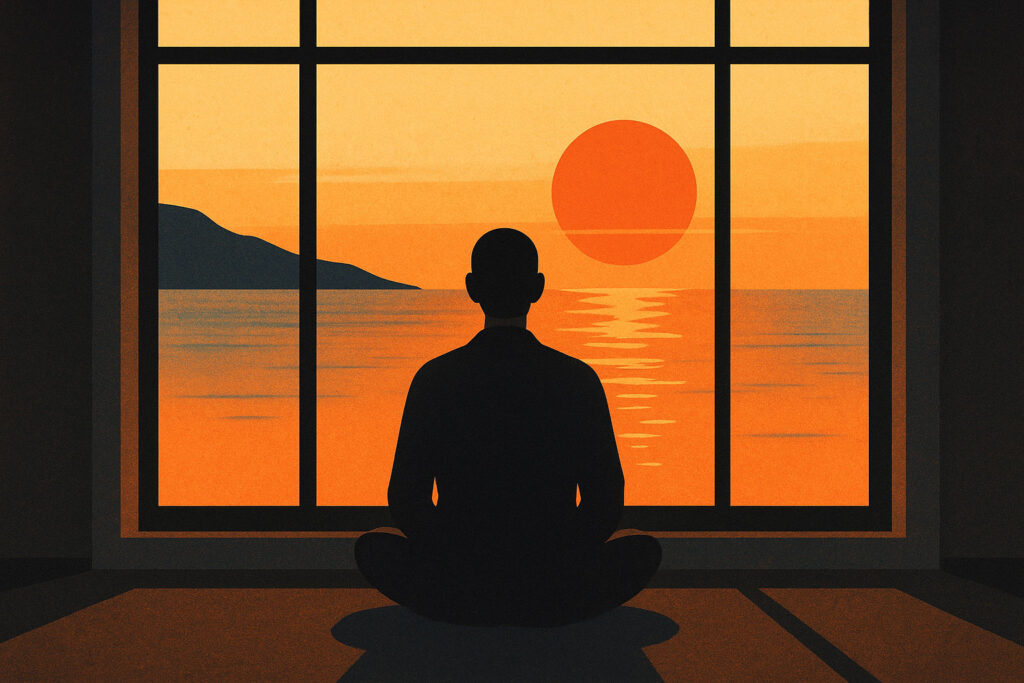
When you play a tournament, time compresses. I’m saying compresses because that’s a word that is often used to describe that phenomenon; time changing or shifting in some way. Compression is way of describing the collapsing of linear, chronological time into the now, the present moment. A four to five hour tournament round requires focus that, while not relentlessly unbroken, it is a continual absorption in the process of the round. It is full on moment-to-moment consciousness. The shot at hand is all that matters. Hours and minutes no longer have meaning when the focus is simply the task at hand in the present moment. Every detail from the lie, to the wind, the yardage, pin location, where to miss. It’s full focus; just now. This is literally straight out of all of my Buddhist training in meditation.
The things that don’t matter in that moment start to fall away. The clutter in your mind, the doubts, the distractions, they all get pushed to the side because the task in front of you demands everything. It’s no secret that Kathleen’s cancer diagnosis and her challenge is also my challenge. It’s a heavy mental load. The stressor of running a regulated business like cannabis is a constant low-grade level of stress. My mind has no shortage of distractions and preoccupation. For me, all of that falls away under the relentless microscope of the tournament. For those four or five hours, it’s only the 18-hole journey that matters. It becomes the universe of the present moment. And in that way, competition becomes this perfect crucible for both finding deep and full presence along the way to self-discovery.
There’s no hiding on the golf course. It’s just you and your preparation. Your mindset. And that’s why it’s so powerful. It is a mirror that reflects you back to you. I think one of the most human things we can do is step willingly into that space: the space where we might fail; where we might fall short. That’s real vulnerability. I think it really is about surrendering to the process and discovering who we are under pressure.
And here’s the crux of a process-driven approach to any skill acquisition. In order for that process to work, there has to be a system in place that gauges whether the process is working. A test. That’s where tournament performance becomes indispensable. You have to test and measure in order to refine your process. When you stress test yourself in a tournament you then have data to see what aspects of the game—mental and physical—held up and what broke. There is an annealing force of competition that transforms and hardens. Then you can integrate that feedback into your practice and your process.
And competition has a way of teaching us humility. You can’t hide from a bad day. And in that humbling moment of failure, we learn how to adapt. How to stay present. How to hold disappointment and keep going. It’s one thing to prepare; it’s another to stay composed when you don’t have your best stuff on any given day. And this is why competition is so potent as a means to develop resilience in life. Staying calm and composed in the face of adversity is a profound skill as a human being. Life is an endless series of problems to be solved and challenges to be overcome. It’s endless. And a great competitor is a great problem solver.
But it’s not all grit and struggle. One of the most beautiful things about competing is the connection it fosters. I have made real friendships that have come from pairings in tournaments. This is one of the ways community gets built. There’s something sacred in the shared experience of putting it all on the line. The stories you carry. The respect that gets built. It’s a shared bit of suffering that creates a deep bond.
If you zoom out even further, there’s something ancient about it all. We’ve always competed. It’s in our DNA and our collective consciousness as humans. But the best kind of competition isn’t about conquest; it’s about calling each other higher. You push me, I push you, and we both become better for it. That’s the sweet spot. When it’s not about ego, it genuinely becomes about growth.
So why do we compete? Because we’re wired for it. Because we want to know ourselves more deeply. Because something inside us needs to be tested. I think it truly has the power to make us better humans with more resilience and a deeper sense of understanding that comes from that moment of vulnerability.
I choose to compete and to put myself in the uncomfortable crucible of competition because it continues to keep my blade sharp. It keeps me deeply connected to the present moment and that feeling of being present. It is a very powerful place where the suffering and the discomfort can lead to more profound insights. It’s like the ancient Tibetan Tonglen meditation: transforming suffering into beauty. That’s competition at its best. We transform the pressure and pain of performance into something that elevates us and shows us a deeper reality.
Monday Meditation: On a 10 count…when was the last time you felt that heat of competition? What did you learn from it? Meditate on why you compete? Or why you choose to avoid competing? Dig in to your personal connection to the challenges of competition and what gifts are waiting to be discovered there.