Monday Meditation
Breathing Your Way Back Home
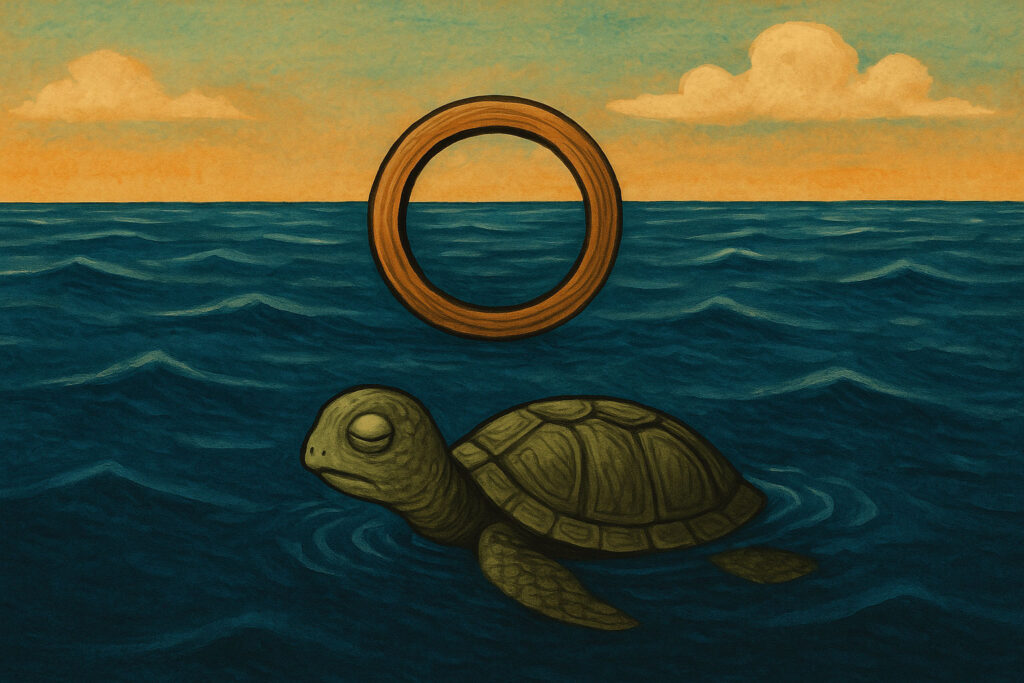
A Buddhist parable of a blind turtle inspires reflection on life’s rarity, balancing samsara’s struggles with presence and spiritual homecoming.


“The miracle is not to walk on water or in thin air. The miracle is to walk on the earth.”
— Thich Nhat Hanh
There’s a moment athletes talk about in hushed tones and a shake of the head: The One, the zone, or flow. The perfect wave, the clean card, the invisible rope through the crux, the lap that stays green from pole to checkered flag. You don’t plan it so much as you get out of its way. The ocean stands up just right; your hands and breath remember what to do. And then it’s gone. If you’re lucky, it leaves a warmth and joy in its wake. If you’re not, it leaves a hunger.
In 2019, I wrote about a film that was unexpectedly inspiring. There is a short monologue that bookends Ford v Ferrari, delivered by Matt Damon’s Carroll Shelby:
“There’s a point at 7,000 RPMs where everything fades. The machine becomes weightless… All that’s left is a body moving through space and time… you feel it coming… and it asks you a question. Three small words. Who are you?”
We believe Shelby knows who he is. That’s why the words land with real gravity. He’s been to that edge where noise, fear, risk, and pain are met. His claim that in the pursuit of excellence you must meet the redline without flinching holds the movie together. Yes, it might all blow up. But in that instant there’s a chance for something rare: a human being confronting ego, mortality, and meaning. Who are you?
What drives us toward the edge is the hope of tasting the moment when the static of life, the bills and deadlines and traffic and aches, all falls away. That’s where it waits for you. At our best, we can see the beauty of the space and time we move through as we push into our goals and our dreams. Some days feel weightless; others impossibly heavy. But the pursuit of something truly special—one singular moment—in our area of focus is what drives us.
Another scene from the film frames the same truth from Ken Miles’ character:
“You have to be kind to the car… If you’re going to push a machine to the limit and expect it to hold together, you’ve got to sense where that limit is… See that—out there—that’s the perfect lap. No mistakes… Most people don’t even know it’s there. But it is.”
This is more than mechanics. The awareness Miles describes is a way to live: see what isn’t obvious, feel beyond the gauges, trust the inner instrument. In this scene, he offers his son a compass without any pretense: look past the low ceiling of ordinary reality. That is the heart of so many spiritual traditions delivered here without dogma, simple and clear. “Be kind to the car.” I see the car as a metaphor for the vehicle for our life. If we take good care of the car—if we are kind to the car—we keep the car on the road of life and we find our magic moment. It does no good, if the car is pushed so hard that it dies or we crash.
You could read the film as a takedown of corporate cowardice, committee decisions that sand the edges off anything extraordinary. But the deeper story is human. Ken Miles is flawed, and we love him more for it. Shelby sees him clearly. Together they find who they are in the mayhem of Le Mans and, for a few luminous minutes, they take the perfect lap. They find The One.
What is The One? The perfect wave, round, ascent, lap, the rare convergence of preparation and conditions when focused attention becomes a blade. It isn’t just a peak moment; it becomes an identity test. What am I made of? Can I bring body and mind together for a singular moment of greatness? Or as Shelby asks, “who am I?”
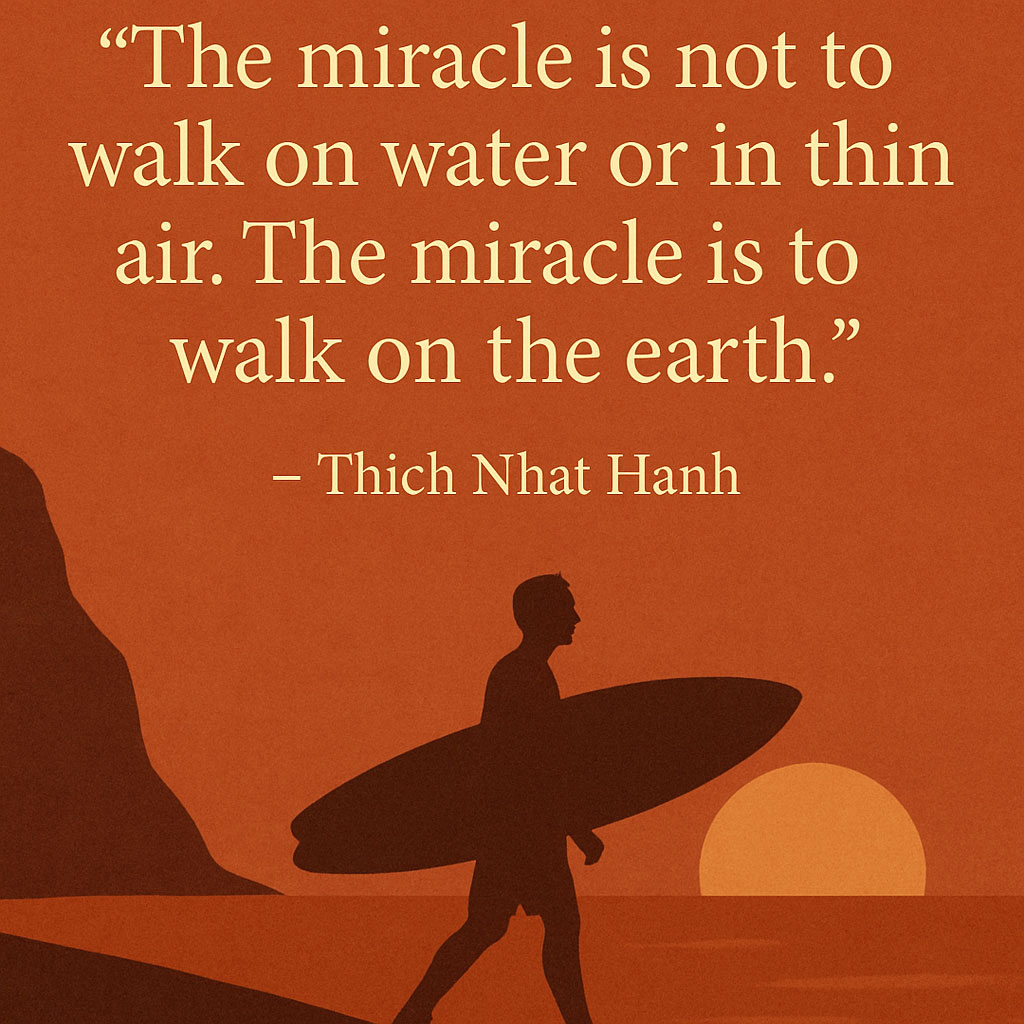
Watching 100 Foot Wave brought this back. Instead of the perfect lap on a track, these surfers are chasing the perfect wave. Look closely at any discipline and a through-line appears: the pursuit of an extremely rare moment of flow and precision that feels like touching the unattainable.
There is a ledger to this pursuit filled with credits and debits. First, the sheer cost; the money for gear and travel. Then the cost to relationships, the time we are away from family and friends. There is the toll on the body, the overuse, the sleep debt, and at the far end, safety and mortality. All of it weighs on the risk–reward of achieving something that fades almost as soon as it appears. If this moment is so fleeting, why do some people spend their lives chasing it? If we know the satisfaction is fleeting and the debits outweigh the deposits, is there a way to engage with this pursuit that isn’t so punishing?
Three Buddhist concepts offer a pretty nice reframe: anicca (impermanence), chanda (wholesome aspiration), and upekkhā (equanimity). Peak moments are fleeting. You can’t stay there; impermanence is a given. The question is how do we pursue it? Can we aim with chanda, allowing the process to be sustainable rather than summit at all costs? Maybe. If we can find equanimity as we lean into our perfect lap, the journey becomes the destination. This, of course, is a personal journey for each individual to discover; there is no formula here. I think Buddhist philosophy reminds us that ultimately there is nothing to grasp, only the joy of presence in a moment beyond time. When we cling to outcome or try to chase down peak moments, this can become a prison of relentless cycles of disappointment and depression. Can we chase these moments with balance? I think it’s possible. But when we risk life and limb chasing what makes us feel most alive, there is a high likelihood that there will be a very high price to be paid for that fleeting moment. Catch a wave, enjoy the ride, knowing there are always more waves to come.
For me it comes down to this: what is the quality of the life and your state of consciousness you can sustain while you pursue your dream. The point isn’t to stop chasing The One. It’s to stop believing your wholeness is waiting at the checkered flag or the summit. We still paddle out, lace up, strap in, because practicing presence is its own perfect lap. If The One shows up, grab a high five, wash the car, have a burger, and get some rest. And some day, that magic moment may come again.
Monday Meditation: On a slow 10 count, reflect on your own notion of The One. What are you chasing? And what is the price you’re willing to pay to get there? Are there areas of your life where you need to bring a more balanced approach to your pursuits or goals? Tune in to any areas that might be compromising your sense of equanimity or joy.
A Buddhist parable of a blind turtle inspires reflection on life’s rarity, balancing samsara’s struggles with presence and spiritual homecoming.
Pablo Neruda’s “Keeping Quiet” teaches stillness amid chaos, reminding us that silence, breath, and presence restore peace and balance.

Inspired by Rory McIlroy’s Masters win and local golf struggles, this meditation explores resilience, nerves, and the courage to persevere.