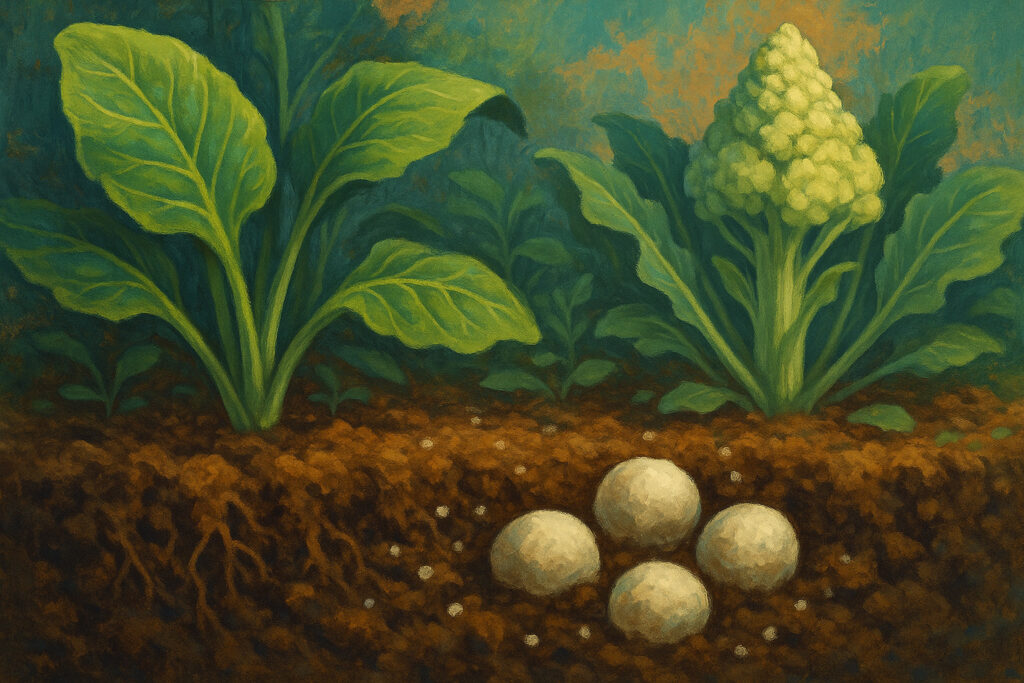
We’re obsessed with calcium—for good reason. If nitrogen is the fuel and carbon is the frame, calcium is the architect that decides whether tissues are tight or leaky, whether roots explore confidently, and whether flowers finish with integrity. In gardens and grows alike, getting calcium right is less about a rescue dose and more about creating a calm, steady current that delivers it exactly when new tissues are being built.
Calcium’s first job is structural. It cross-links the pectins in cell walls so leaves feel crisp, stems stay sturdy, and fruit and flowers hold their shape. That same scaffolding helps seals in membranes—less leakage, fewer soft spots, better stress tolerance when heat spikes or the wind kicks up. Calcium also sits at the heart of the plant’s internal messaging system. When plants are stressed—salt, heat, pests—tiny pulses of calcium inside cells act like flares, guiding a measured response. Adequate supply doesn’t make a plant invincible; it makes it organized under pressure.
Here’s the catch: calcium rides with water. It moves upward with transpiration, through the xylem stream, and it doesn’t easily redistribute once it arrives. That means new growth and developing flowers only get what today’s water flow brings. Peaks and dips in moisture or humidity become peaks and dips in calcium delivery. The classic disorders—tip burn, blossom-end rot, weak flower tissue—often trace back to inconsistent delivery, not the total amount present in the soil or mix. The cure is rarely “more calcium once.” The cure is steady moisture, balanced humidity (VPD), and a predictable source of calcium in the root zone.
Choosing Your Calcium
Among agricultural forms, we favor calcium carbonate—cal carb—because it builds for the long term. It supplies calcium and gently sweetens acidic soils toward the agronomic sweet spot. Its effectiveness depends on fineness (the smaller the grind, the faster it works), purity, and moisture/biology to help it dissolve. Think of cal carb as your structural renovation: slower, cleaner, and lasting.
When you need calcium without nudging pH upward—especially in high-pH soils—reach for gypsum (calcium + sulfur). It nudges soil toward better structure, helps displace excess sodium where that’s an issue, and leaves pH largely unchanged. It’s a quiet fixer for soils that need calcium’s benefits but not more alkalinity.
Sometimes the job calls for speed. That’s when a soluble calcium source shines through fertigation or a gentle foliar. Soluble calcium paired with nitrate is the workhorse for quick delivery to actively expanding tissues. Keep the mix clean, the solution pH in range, and avoid combining calcium with phosphates or sulfates in the same stock tank unless you know your compatibility—precipitation is the enemy of availability. For foliar support, lighter, more frequent sprays beat one heavy pass, and cool parts of the day keep leaves safe.
There are also calcium phosphates—forms that supply both calcium and phosphorus. They move more slowly and lean on biology and organic acids to unlock availability, which can be an advantage in building programs where you’re feeding the soil community as much as the crop.
For most fine crops, we skip the hot limes (quicklime, hydrated lime). They push pH up so fast they’re hard to manage around delicate roots and active biology.
Why Calcium Improves Soil Feel
Calcium doesn’t just feed the plant; it improves the feel of the soil or mix. On exchange sites, calcium helps particles gather into crumbs, opening pores so air and water can trade places more easily. In plain terms: better infiltration, fewer sticky clods, roots that travel farther and finer. When calcium is crowded out by too much potassium, magnesium, or sodium, soils can slump or smear and roots get claustrophobic. A calcium-forward base saturation (with sensible room left for potassium and magnesium) builds a friendlier home for roots.
The Role of Aminos
Pairing calcium with amino acids is a quiet upgrade. Certain aminos can loosely “escort” calcium through tough surfaces—like leaf cuticles—and they feed microbes that, in turn, produce organic acids that help untie calcium that’s bound up in carbonates. Aminos don’t replace good watering or environment; they make a good program a little smoother.
Hidden Handbrakes
Calcium uptake is easy to block by accident. Push potassium too hard in late veg and you can crowd out calcium at the root interface. Lean too hard on ammonium nitrogen and you can slow calcium’s entry while driving soft, watery growth. Run humidity too high or airflow too low and transpiration slows—so does calcium delivery. On the flip side, severe dry-backs can throttle the xylem stream and starve the most actively growing tips. Think “consistent and moderate” more than “peaks and valleys.”
Cannabis Knows
Cannabis makes calcium’s lessons obvious. During stretch and the early weeks of flower, growth is explosive; calcium delivery has to keep pace. Stable moisture and balanced humidity prevent the micro-deficiencies that show up as weak new growth, brittle petioles, or stressed flower tissue. A sensible path looks like this: pre-build the root zone (cal carb where acidity and structure need help; gypsum where pH is already high), run a clean soluble calcium program during rapid growth, and keep the room honest—uniform airflow, steady VPD, and irrigation that avoids feast-or-famine. You’ll notice it in how the canopy holds its posture, how leaves recover after stress, and how finished flowers retain their integrity through drying and curing.
Putting It Together
Start with a baseline test so you know where pH, salinity, and the balance of calcium, magnesium, and potassium actually sit. If your soil trends acidic and calcium-poor, bring in cal carb with enough lead time for biology and moisture to do their quiet work. If your pH is already high, use gypsum to add calcium without pushing alkalinity. During active growth, layer in soluble calcium through fertigation, staged so it never tangles with incompatible partners. Keep irrigation steady, not dramatic. Keep airflow even and VPD in the middle lane so the xylem stream never stalls. If you like a little finesse, add aminos to help with movement and microbial tone.
The headline isn’t “more calcium.” It’s better delivery, more of the time. When calcium is present, the environment is steady, and the competition at the root surface is balanced, plants act like themselves: leaves are sturdy, roots are curious, flowers finish with integrity, and the post-harvest window feels less like a cliff and more like a gentle landing. That’s why we’re obsessed—not with the symbol on the periodic table, but with what calcium allows a plant to become when everything around it flows.