Monday Meditation
Breathing Your Way Back Home
A Buddhist parable of a blind turtle inspires reflection on life’s rarity, balancing samsara’s struggles with presence and spiritual homecoming.
Mushrooms have been on my mind a lot lately – Paul Stamets is coming to the McDonald Theatre here in Eugene next month; autumn is mushroom season; and we had a wild chanterelle mushroom soup tonight at a new restaurant in town. Mushrooms have been a mini-obsession for the last 20 years, from their incredible medicinal quality for the immune system to the way they work in cultivation. At my age and with my parents aging, I have been thinking about ancestry and family lineage a lot lately, the idea of an invisible network has been on my mind.
But somehow tonight all of those threads gave rise to the memory that somewhere in Eastern Oregon near the Idaho border, you can find the largest known living organism on Earth. It’s not a massive redwood or anything most of us would picture. It’s a fungus – a mycelial network called Armillaria ostoyae, stretching across nearly four square miles of forest. Scientists believe it might be 8000 years old! And none of that massive network is visible when you explore that forest; it all exists below ground, out of view.
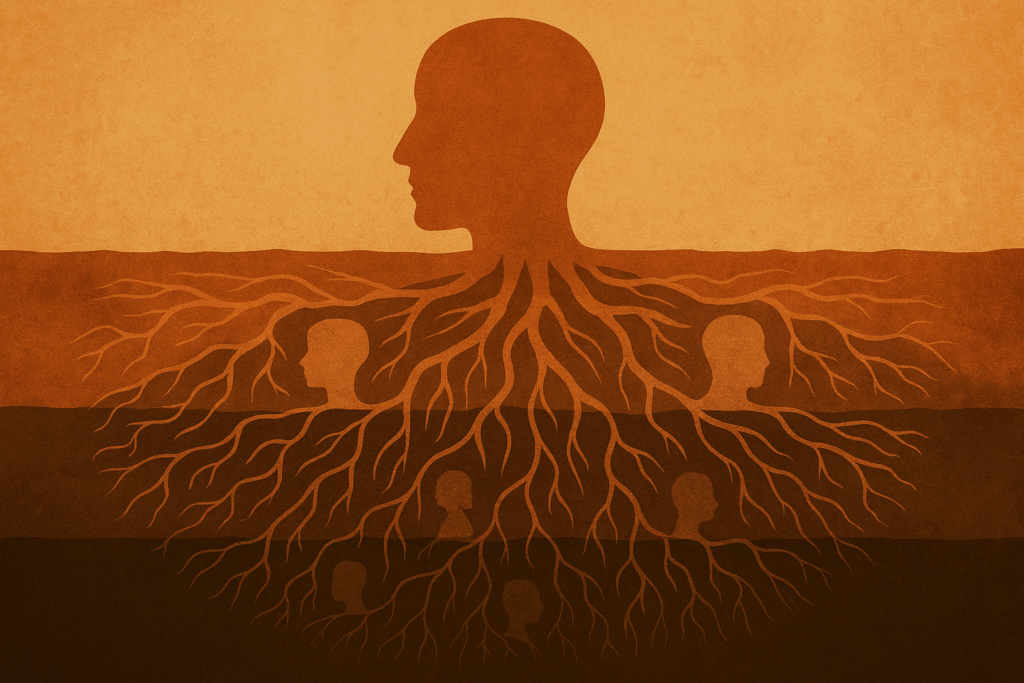
Perhaps this is why that vast mycelial network came to mind when I was thinking about the idea of ancestry and our deeper family lineage. Our past network of ancestors has a depth and energy that is almost all unseen and hidden. And when we glimpse into this vast and complex fungal network we find so many parallels to our own vast ancestral lineage, it’s stunning.
What is mycelium? Mycelium is the underground root-like network of a fungus, made up of tiny filaments called hyphae. When we dig up soil rich with mycelium, the white mass of hyphae – the fine filaments that comprise the network—are completely visible. It doesn’t look like much, but mycelium are there to literally digest organic matter and then absorb and transform the freed nutrients – pulling and transforming ancient carbon into an adaptive network that even sends faint electrical pulses as it routes care where it’s needed.
So how does this fungal network create that energy that fires those electrical impulses? Fungi are basically sugar junkies. Since they can’t perform photosynthesis, they rely on plants to share sugars through secretions from their roots known as root exudates. Mycelium create “micro straws” in the form of mycorrhizal fungi that pull that plant glucose straight into their system. In exchange, the mycelium deliver nutrients the plants need but otherwise could not extract without the assistance of the mycelium. It is the ultimate symbiotic relationship.
So then what’s the relationship between mushrooms and mycelium? When we see mushrooms appear here’s what’s happening: mushrooms – aka fruiting bodies – bloom when the underground network has enough reserves and the right seasonal signals. Autumn – some rain, cool air, shorter hours of daylight – tells the network that the time is right to surge upward and bloom. So the mushrooms are the above-ground emissaries that break through the dark layer to release their spores and reproduce in the light.
So now here comes the ancestry connection.
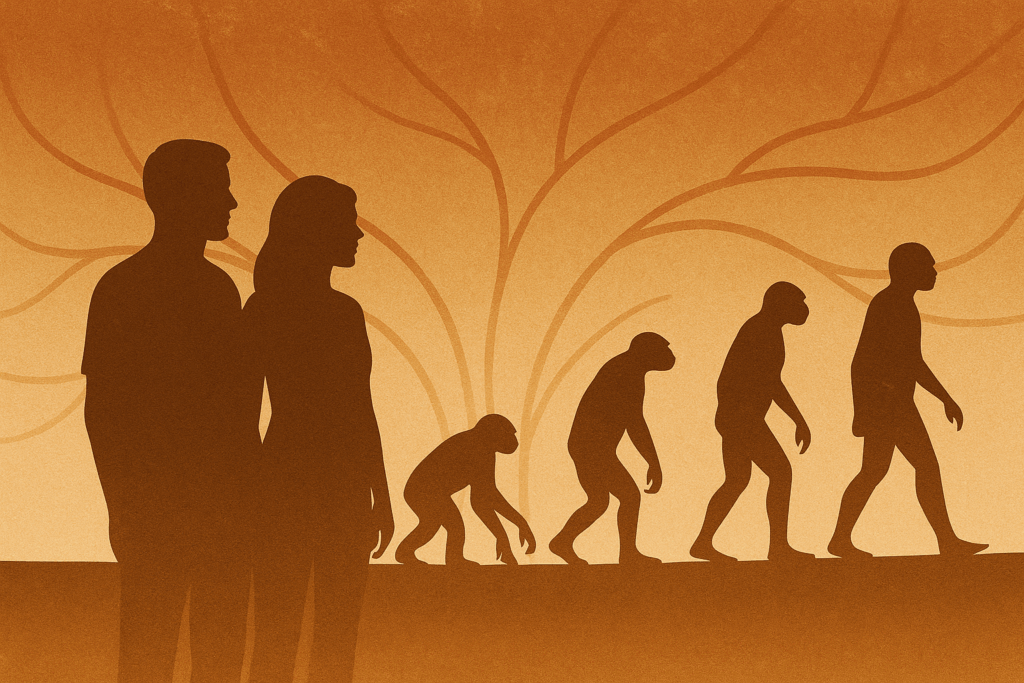
So much of what made us -you and me – is hidden beneath the surface. We have black and white and sepia pictures and stories and names from our past. We have cousins and great grandparents; we have aunts and uncles. But then we glimpse beyond each of those loved ones and then beyond them and so on and so on. How far back does that invisible network stretch? Here’s the math: homo sapiens are 300,000 years old. Our current genealogical records and methods allow us to reach back a maximum of perhaps 1,000 years; most records only allow us a window of 300-500 years. So now think about the fact that we have 300,000 years of homo sapiens DNA in our bloodline. That’s a pretty vast network stretching beyond our tiny window of personal history. It’s like genealogical outer space or the black void of the deep ocean.
So when we look deep into our ancestry, we catch glimpses; a story, a family trait, a photograph, but most of the web of our lineage runs deep underground; our DNA, our tendencies, the ways we love and the ways we fear. These are threads passed forward through time. The network is ancient. And it flows through us like invisible strings whether we recognize it or not.
But here’s where it gets interesting: mycelium doesn’t just move sugars and nutrients through this white hyphae web, it actually communicates. It fires faint electrical signals that travel through the network. Scientists believe they carry information: warnings, needs, the presence or absence of nutrients. It’s a subterranean language, almost like a nervous system.
Our ancestry works in much the same way. We carry the bright pulses of resilience, creativity and tenderness from our parents, grandparents and beyond. We also carry the more difficult signals of trauma, addiction and grief. All of that moves through and lives in the network of our collective ancestry tree and our collective consciousness. And we are the fruiting bodies of this ancestral network. We have broken through the invisible surface of consciousness as the genetic emissaries of our network; here to carry the torch, reproduce and transform what needs to be repaired.
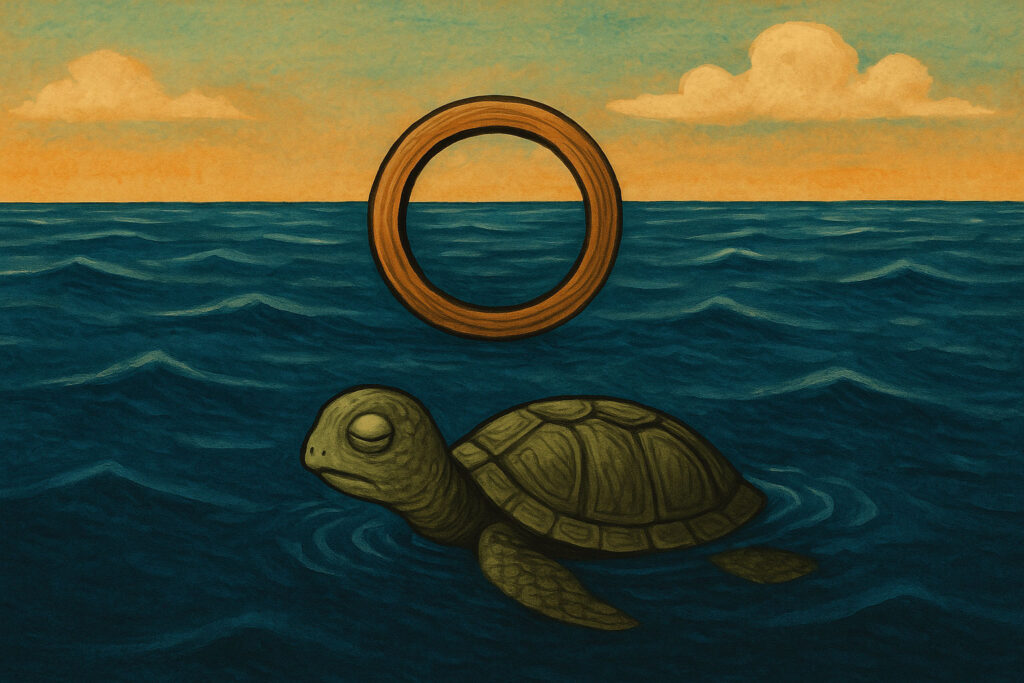
Like the Tibetan story of the turtle poking its nose through the wooden ring, we are the living representative of our lineage and our ancestral dream.
But here’s another wild connection. When a portion of a mycelium network is damaged, it reroutes. It heals itself. It finds a way around the break so the system can keep living. That’s where this metaphor really lands. Humans have the ability to reroute too. We don’t have to pass on every old signal unchanged. The old patterns or wounds that came down the line don’t have to flow straight through us into the future. We can shift them; transform them. Reroute the signal into something better.
And just like in a forest, there is generosity in our web. Mycelium allows older, stronger “mother trees” to send nutrients to younger, weaker ones. Life flows where it is most needed. Our ancestors did that for us in ways both seen and unseen. We have done that for our children and we hope that line will continue with theirs. We have the same task: to keep the web alive and healthy for those who come after. This is our responsibility as the current embodiment of our ancestors. The mycelial web teaches us that ancestry is not a straight line, but a living network – pulsing, rerouting, healing, and always connecting.
So the Monday Meditation this week is simple: On a slow ten count 4/8 rhythm (4 count on the inhale, 8 count on the exhale), meditate on this: Which signals am I passing forward? Which old patterns can I choose to reroute? And what light can I send through the web so it flows stronger into the generations ahead? Enjoy the Fall mushroom season. Wild Chantrelles are here so it is a perfect time to taste some of the magic of this ancient, hidden network and reflect on the network that flows through you.
A Buddhist parable of a blind turtle inspires reflection on life’s rarity, balancing samsara’s struggles with presence and spiritual homecoming.

Pablo Neruda’s “Keeping Quiet” teaches stillness amid chaos, reminding us that silence, breath, and presence restore peace and balance.

Inspired by Rory McIlroy’s Masters win and local golf struggles, this meditation explores resilience, nerves, and the courage to persevere.